Suboptimal routes inflate fuel bills and erode voyage margins
Unnecessary fuel burn from weather-reactive routing directly impacts competitiveness. Proactive optimisation reduces consumption without compromising schedule.
Marine Weather Intelligence combines 30 years of offshore expertise with AI-driven probabilistic forecasting, delivering optimised routes, reliable ETAs, and real-time safety alerts for fleet managers and charterers worldwide.
Unexpected deviations, missed ETAs, and rising fuel costs put commercial shipping under constant pressure. Traditional routing tools weren't built for today's climate volatility.
Unnecessary fuel burn from weather-reactive routing directly impacts competitiveness. Proactive optimisation reduces consumption without compromising schedule.
A single deviation triggers port congestion, cargo penalties, and lost charter opportunities. Weather-intelligent planning prevents the chain reaction before it starts.
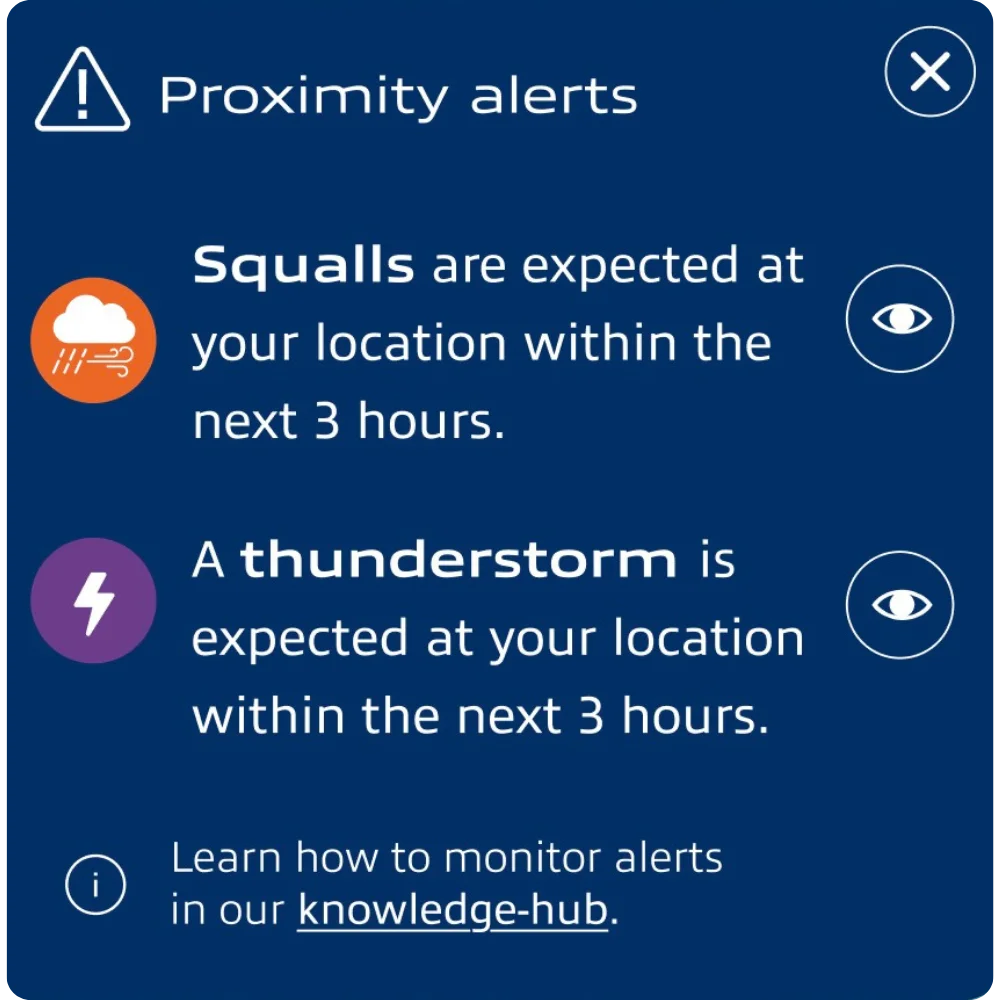
Squalls, rogue currents, and storm fronts detected too late put crew and cargo at risk. Expert-backed alerts close the gap between generic data and operational reality.
Raw meteorological data requires expert interpretation, blocking access for charterers and management. MWI translates complexity into clear, actionable operational guidance.
Marine Weather Intelligence turns weather uncertainty into a predictable, high-performance competitive advantage, for fleet managers, operators, and charterers alike.
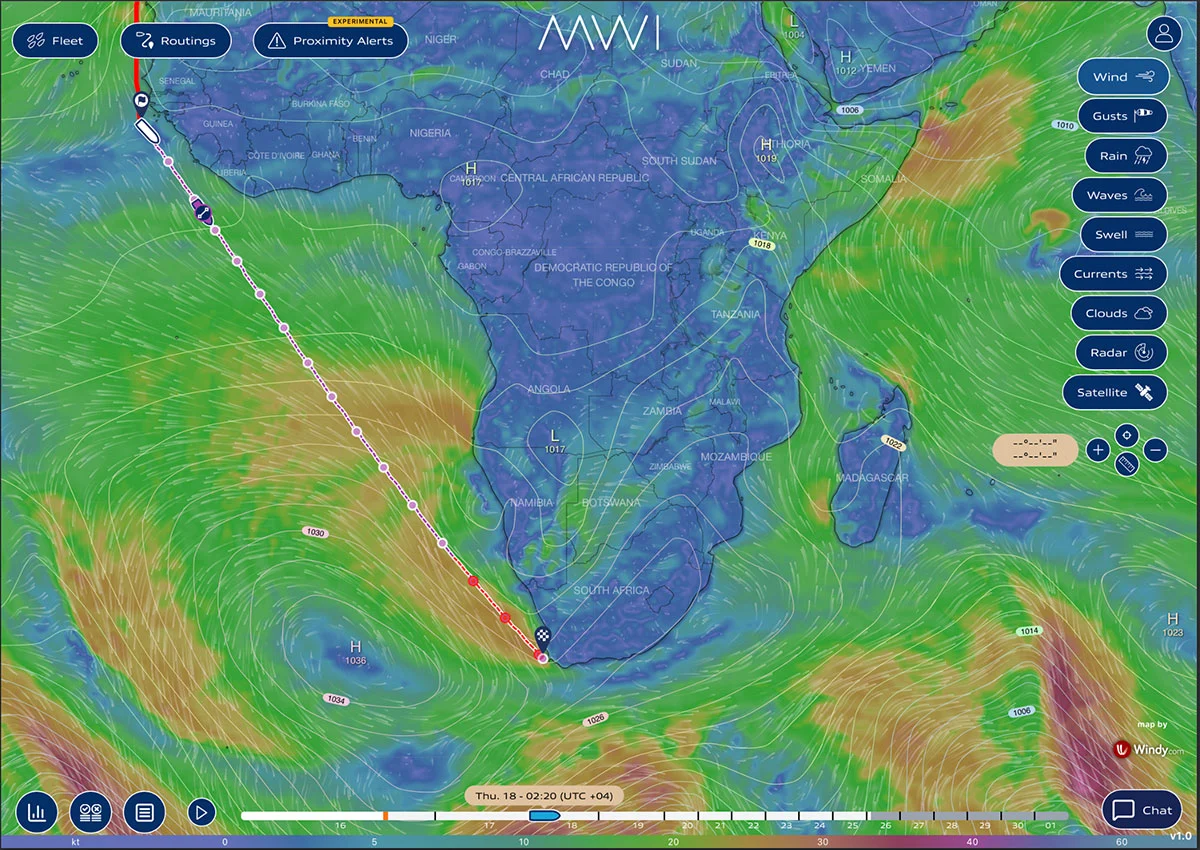
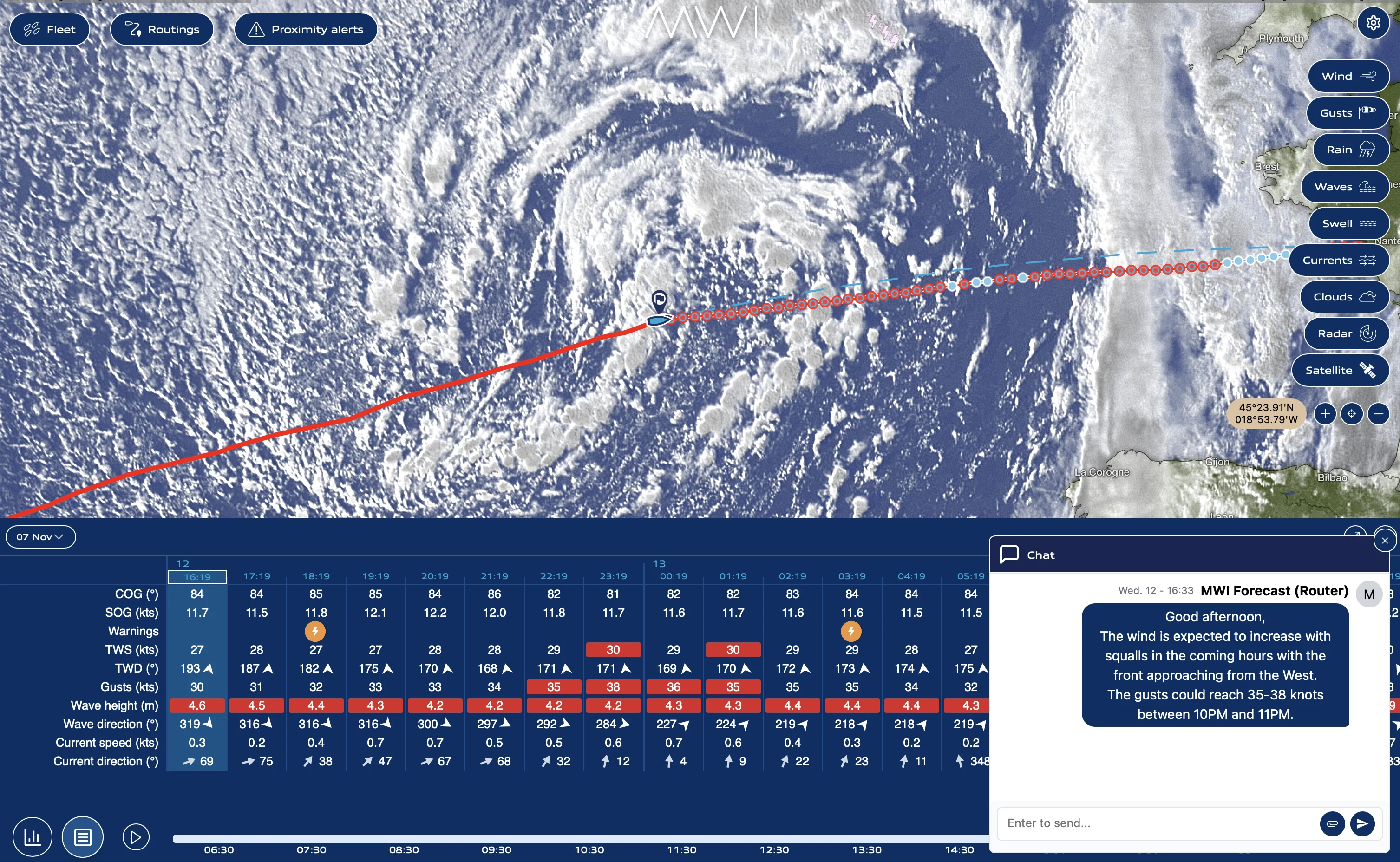
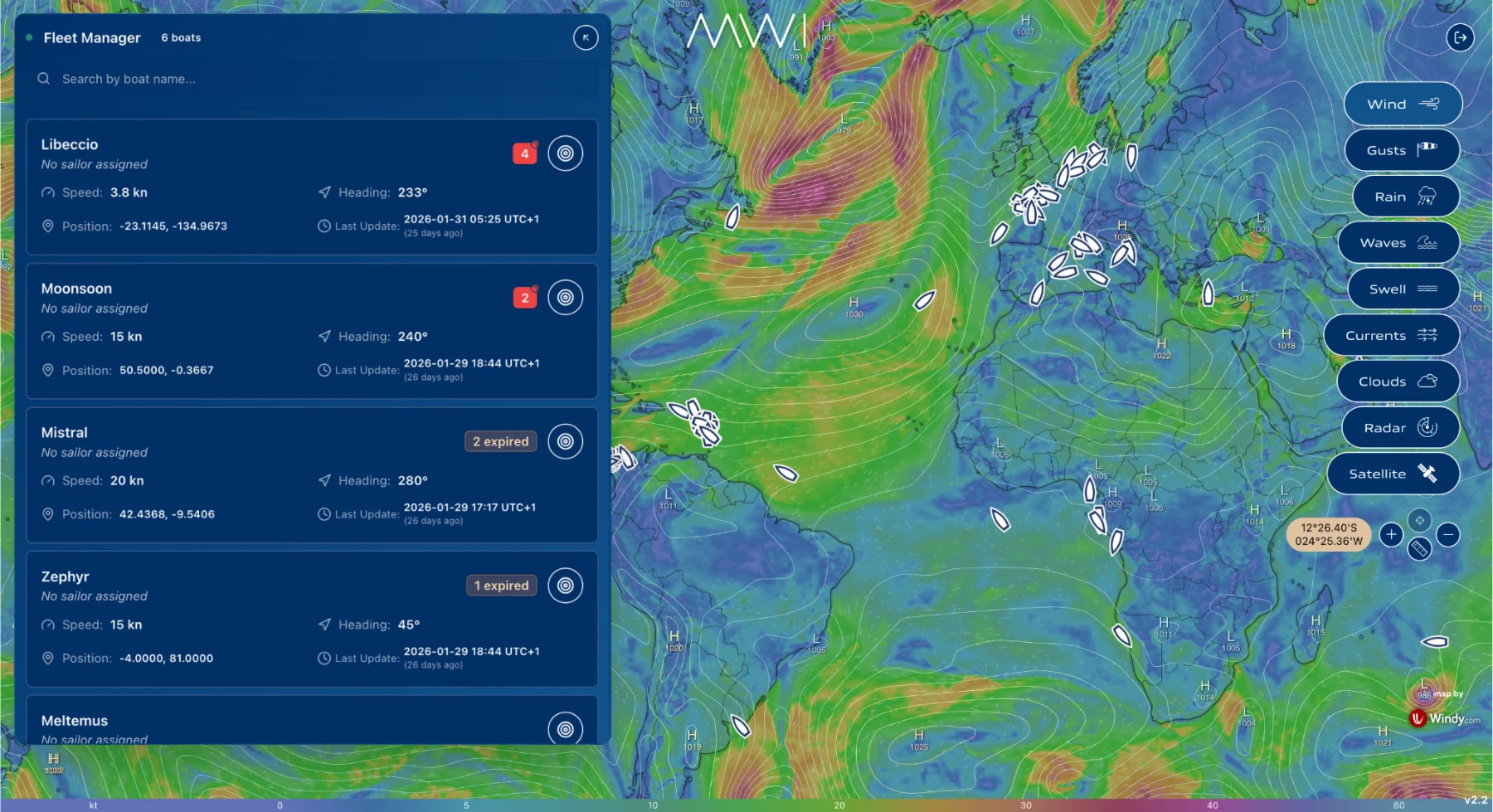
Automatic position updates accounting for speed variations under changing environmental and operational conditions, continuously throughout the voyage.
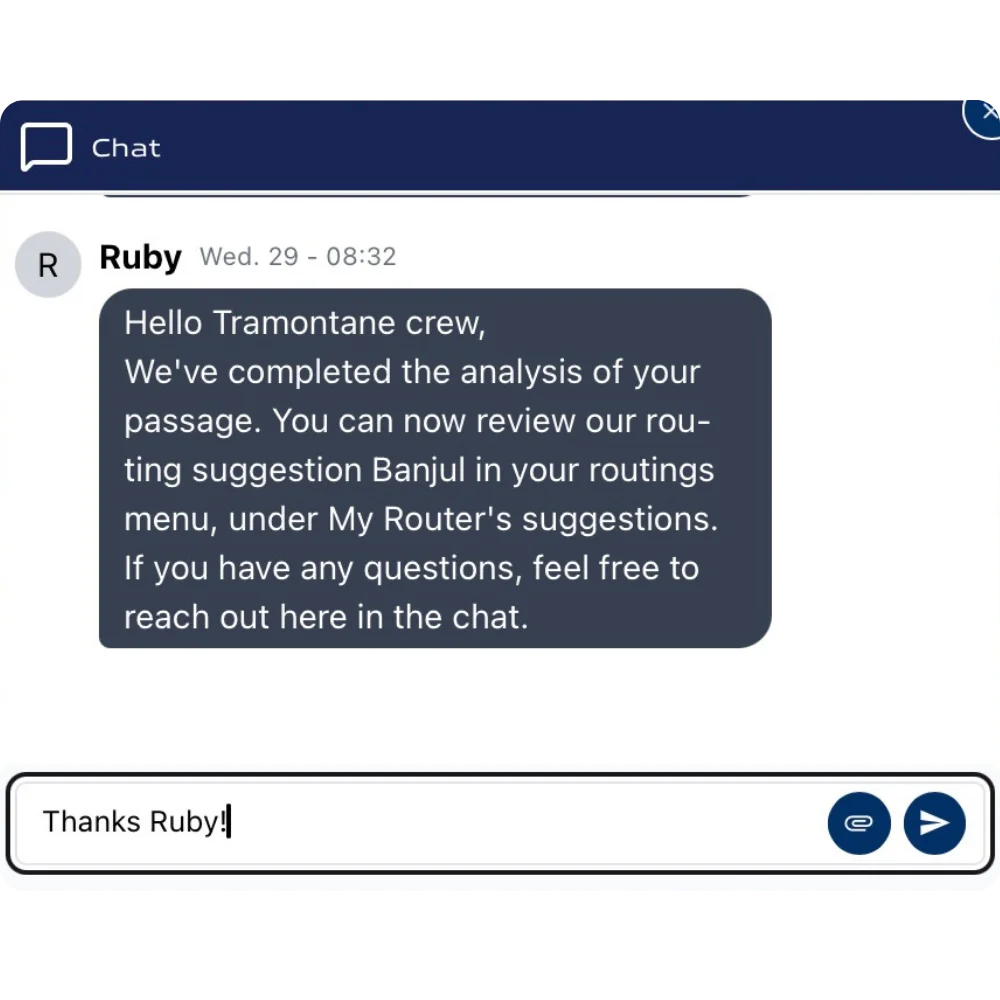
No hardware deployment. All you need is an internet access.
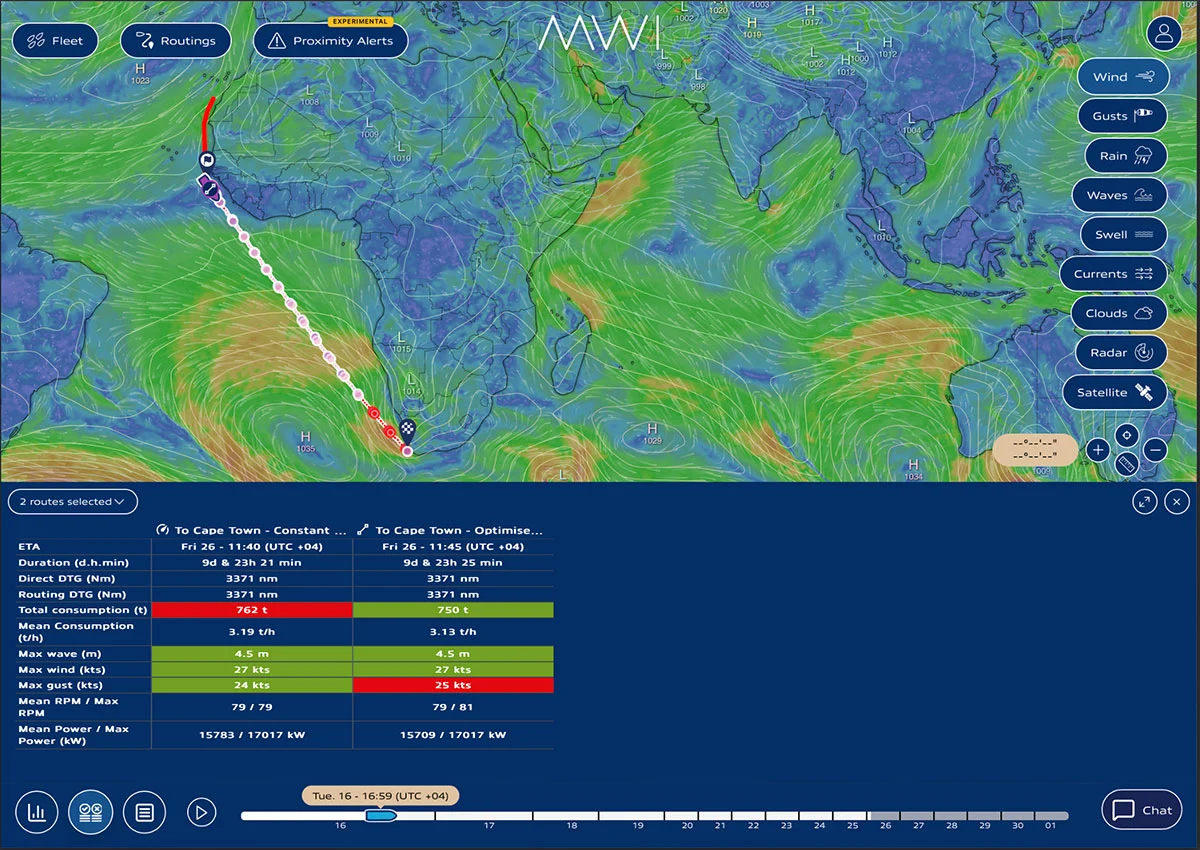
Up to 15% more efficient than traditional routing.
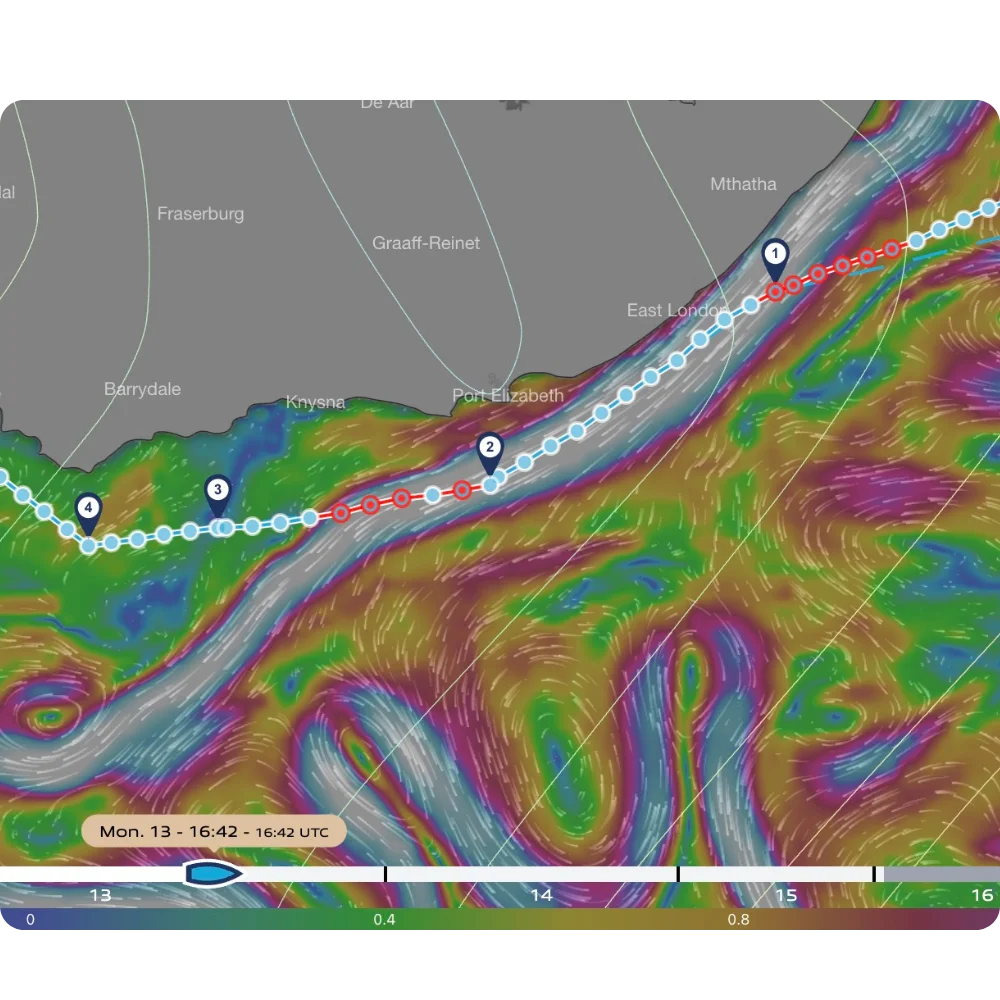
Compare your routes side by side, with quantified fuel savings, time gains, and emissions reduction before departure so you always make the optimal call.
Routing calibrated to your vessel's exact profile.
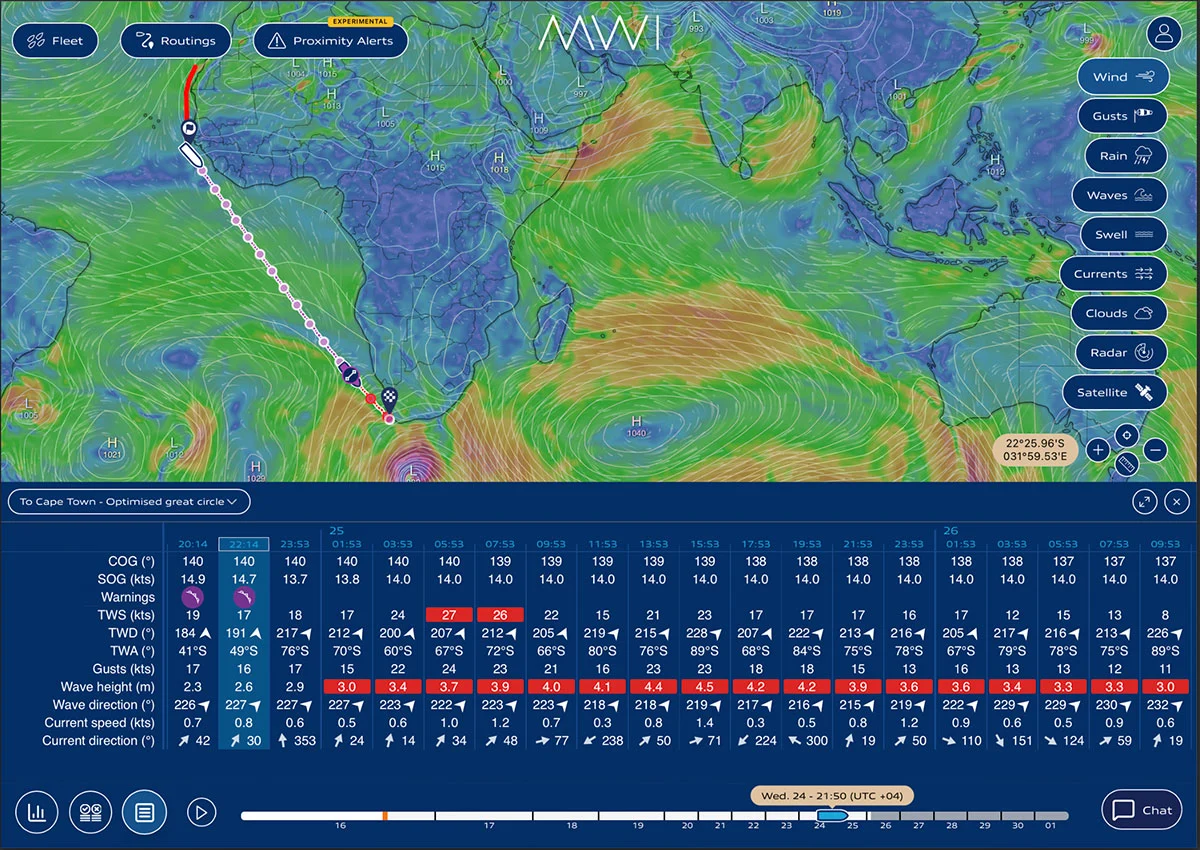
Integrate your vessel's multi-dimensional polars for fully personalised routing, performance-limit alerts, and consumption tracking calibrated to each ship's specific speed, heading, and sea state characteristics.
Plan with confidence, not just averages.
Marine Weather Intelligence aggregates 100+ ensemble weather models with AI-driven bias correction, giving you a real probability envelope across short, mid, and long-term horizons. Low dispersion = high confidence. High dispersion = plan contingencies.
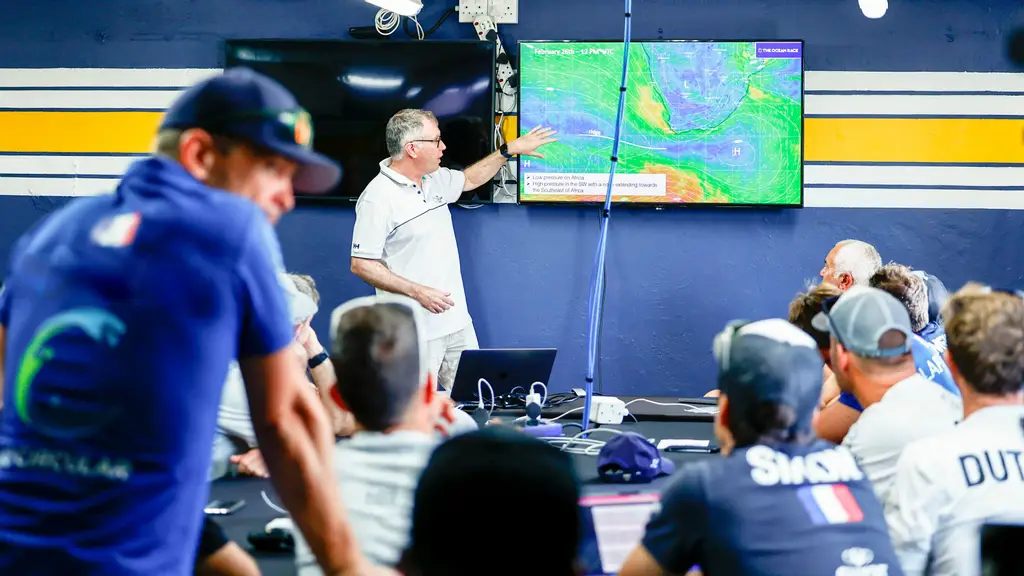
Our routing methodology was forged in the world's most demanding offshore races: the Vendée Globe, The Ocean Race, Route du Rhum. Where margins are small, errors are costly, and every forecast is acted on under pressure. That same rigour is now embedded in every recommendation we make for commercial fleet operations.
Christian Dumard's career spans four Vendée Globe campaigns and complex maritime logistics including oil platform towing and the transport of the James Webb Telescope. Marine Weather Intelligence's AI does not replace this expertise. It scales and operationalises it across your entire fleet.
First time I met such a good weather provider. Marine Weather Intelligence provides accurate weather routing, detailed analysis, and suggestions. They closely monitor vessel position and speed. It is grateful.
Marine Weather Intelligence is a key service of the Vendée Globe Race Direction. They guarantee a complete analysis of the situation and its precise evolution for the entire fleet of boats around the world.
Expert articles, platform updates, and case studies from Marine Weather Intelligence.
Thirty years of offshore racing meteorology expertise, now applied to AI-driven routing for commercial maritime operations. How Marine Weather Intelligence transfers race-level know-how to every sea-dependent sector.
Read the article →
Weather routing is not just about avoiding storms, it is about finding the optimal balance between speed, sea state, and fuel burn across the full passage. Small course and speed adjustments, made at the right moment, compound into significant savings.
Read the article →
In maritime operations, it is commonly assumed that reducing vessel speed lowers fuel consumption. While true in stable conditions, real-world voyages are shaped by evolving weather and sea state, and the relationship between speed and fuel use is not always what it seems.
Read the article →Request a demo: our team will review your fleet profile, trade routes, and operational thresholds to propose the right weather intelligence setup for you.